Longevity
Last Updated
Jun 4, 2026
Table of contents
The longevity field has a noise problem. Scroll social media and you will find influencers stacking a dozen supplements, promoting peptides with no human data, and treating every new molecule like the fountain of youth. Meanwhile, a small number of medications have quietly built decades of real evidence, the kind that comes from clinical trials and the prescribing of serious longevity physicians.
This guide focuses on what actually holds up. These are the medications most commonly discussed and prescribed in evidence-based longevity medicine, with an honest look at what we know, what we do not, and what the trade-offs are.
The evidence, in brief
Signal over noise.
The shortlist
Eight medications, side by side.
| Medication | Primary mechanism | Evidence | Rx | Monthly cost | Common use |
|---|---|---|---|---|---|
| Metformin | Insulin sensitivity, AMPK, lower inflammation | Strong | Yes | $4 to $30 | Metabolic health, glucose |
| Rapamycin | mTOR inhibition, autophagy, immune remodeling | Moderate | Yes | $50 to $200 | Cellular aging, immunity |
| GLP-1 agonists | Fat loss, cardiovascular protection, lower inflammation | Strong | Yes | $300 to $1,000+ | Obesity, cardiometabolic risk |
| Testosterone (TRT) | Muscle, bone density, metabolic function | Moderate | Yes | $50 to $200 | Age-related decline in men |
| Statins | LDL and ApoB reduction, CV prevention | Very strong | Yes | $4 to $30 | Cardiovascular prevention |
| Low-dose aspirin | Anti-inflammatory, antiplatelet | Mixed | OTC | $3 to $10 | Secondary CV prevention |
| Acarbose | Blunts post-meal glucose spikes | Moderate | Yes | $15 to $50 | Glucose spike management |
| NAD+ precursors | Cellular energy, DNA repair | Early | OTC | $40 to $100 | Cellular aging, energy |
Read another way
Evidence against cost.
Plot the strength of the evidence against the price, and the punchline is clear: the best-supported longevity drugs are also the cheapest. The unglamorous staples sit in the top-left.
In depth
The medications, one by one.
Metformin
The drug longevity physicians talk about most. Originally for type 2 diabetes, it has been used safely for over 60 years. The longevity interest began with a striking finding: diabetics on metformin appeared to outlive non-diabetic controls. It activates AMPK, lowers chronic inflammation, improves insulin sensitivity, and may reduce some age-related cancers. The TAME trial is the first FDA-approved study designed to test whether a drug can slow aging itself, and metformin is the drug.
Who it is for
Adults concerned with metabolic health, insulin resistance, or cancer risk, particularly those who are not elite athletes.
The trade-off
Early GI side effects that usually resolve, plus an ongoing debate about whether it blunts exercise gains, which is why some physicians cycle it around training.
Rapamycin
The compound that gets researchers most animated. An mTOR inhibitor first used to prevent transplant rejection, it has extended lifespan more consistently and across more species than anything else tested, including in mice started late in life. By dialing down mTOR, the master regulator of cell growth, it promotes autophagy, shifting cells from build mode to repair mode. At low weekly doses, early human data suggests it may enhance immune function rather than suppress it: one study improved elderly patients’ response to the flu vaccine.
Who it is for
People working with a longevity-focused physician who are comfortable on the earlier end of clinical adoption.
The honest caveat
No large, long-term human trials yet prove it extends lifespan in healthy people. The animal data is remarkable and the logic is sound, but certainty is premature.
GLP-1 receptor agonists
Semaglutide and tirzepatide dominate the headlines as weight-loss shots, but the longevity case runs deeper. The SELECT trial showed semaglutide cut major cardiovascular events by 20% in overweight and obese adults, regardless of diabetes status, with later data hinting at kidney, heart failure, and even cancer and neurodegeneration benefits. Since visceral fat is one of the strongest drivers of accelerated aging, these injectables address it more effectively than any prior drug, with benefits that exceed what weight loss alone would predict. This is the answer for anyone searching for the best longevity shots for metabolic health.
Who it is for
Individuals with excess body fat and elevated cardiometabolic risk who have not gotten results through lifestyle alone.
The trade-off
GI side effects early on, cost, and muscle loss during rapid weight reduction, which is why physicians pair it with resistance training and protein.
Testosterone replacement (TRT)
Testosterone declines roughly 1 to 2% per year in men from about age 30. By the 50s and 60s, levels can fall below what is needed for muscle, bone density, cognition, and metabolic health. Adequate testosterone supports several pillars of healthspan, especially lean muscle, the single strongest predictor of functional independence in aging. The TRAVERSE trial, the largest RCT of TRT in older men, found no increased risk of major cardiovascular events, and physiologic replacement has not been shown to raise prostate cancer risk in men without pre-existing disease. The key word is physiologic: the goal is optimization, not maximization. Another injectable that earns its place in a metabolic-health protocol.
Who it is for
Men with clinically low or declining testosterone confirmed by labs, with symptoms like fatigue, muscle loss, poor sleep, or metabolic decline.
The approach
Cypionate injections, gels, or pellets, dosed to reach a healthy mid-range of roughly 600 to 900 ng/dL, not supraphysiologic levels.
Statins
Statins are not exciting, but the evidence base for cardiovascular risk reduction is arguably the strongest of anything on this list. Cardiovascular disease is the number one killer globally, and ApoB-containing lipoproteins drive plaque over decades. Statins cut LDL effectively and, across dozens of large trials, significantly reduce heart attacks, strokes, and cardiovascular death. The case for starting early is cumulative: the longer your arteries are exposed to elevated ApoB, the greater your lifetime risk, so acting before an event dramatically changes the math.
Who it is for
Anyone with elevated ApoB or LDL who wants to lower lifetime cardiovascular risk, especially with a family history.
The trade-off
Muscle aches in some users, though blinded studies suggest true statin-caused symptoms are rarer than believed. PCSK9 inhibitors or bempedoic acid exist for the intolerant.
Acarbose
Acarbose rarely makes headlines but has a quietly compelling profile. It slows carbohydrate digestion, blunting the post-meal glucose spikes that drive insulin resistance over time. In the Interventions Testing Program, one of the most rigorous animal lifespan studies ever run, acarbose significantly extended lifespan in male mice, and human data shows it reduces glucose variability and may lower cardiovascular events in people with impaired glucose tolerance.
Who it is for
People focused on glucose optimization, especially those with elevated post-meal spikes identified on a CGM.
The trade-off
Mostly GI, gas and bloating from undigested carbs reaching the lower gut, which tend to ease as the body adapts.
NAD+ precursors (NMN / NR)
NAD+ is a coenzyme essential to cellular energy, DNA repair, and sirtuin activation, and its levels fall significantly with age. NMN and NR are precursors the body converts to NAD+. Animal studies show improvements in metabolic function, endurance, and aging markers, and David Sinclair has been a vocal proponent. The honest assessment: human data is limited. Some trials raise blood NAD+, but whether that translates to reduced disease or longer life is unproven, and as supplements they carry less oversight and variable quality.
Who it is for
People willing to invest in an emerging intervention with strong theory but incomplete human evidence.
The trade-off
Sold as supplements, not medications, so product quality varies and clinical benefit is not yet established.
Putting it together
How a real stack is built.
The physicians doing this at the highest level never prescribe one drug in isolation. They build protocols around your labs, history, risk factors, and goals. A typical longevity patient might run metformin for metabolic health, a statin for cardiovascular protection, and TRT if labs show deficiency, with CGM monitoring and quarterly blood panels tracking progress. The common thread is that every intervention is data-driven, monitored, and adjusted. It is pharmaceutical tools used alongside sleep, nutrition, exercise, and stress management, not pills instead of them.
Common questions
Longevity medications, answered.
What are the best longevity drugs?
By weight of evidence, the strongest are also the least glamorous: statins for cardiovascular prevention, metformin for metabolic health, and GLP-1 agonists for cardiometabolic risk. Rapamycin is the most intellectually exciting but still needs more human data, and TRT is highly effective for the right candidate.
What are the best longevity shots for metabolic health?
The injectable options are GLP-1 agonists (semaglutide and tirzepatide) and testosterone replacement. GLP-1s deliver cardiovascular and metabolic benefits beyond weight loss, and physiologic TRT supports muscle, bone, and insulin sensitivity. Both belong in a metabolic-health protocol only under physician guidance.
Do longevity medications require a prescription?
Most do. Metformin, rapamycin, GLP-1 agonists, TRT, statins, and acarbose all require a prescription from a licensed physician. Low-dose aspirin and NAD+ precursors are sold over the counter, the latter as a supplement with less regulatory oversight.
Are these longevity treatments safe?
Each carries real risks and trade-offs, which is why none should be used without medical supervision. The safest path is data first: baseline labs, a physician who understands the science, and ongoing monitoring to adjust as your numbers change.
The bottom line
The best protocol is the least flashy.
The medications with the strongest longevity evidence today are the unglamorous ones: metformin, statins, and now GLP-1 agonists. Rapamycin is the most exciting but still needs more human data. TRT is highly effective for the right candidate. NAD+ precursors remain a compelling bet that has not fully paid off. The best longevity protocol is not the one with the most medications. It is the one built on solid diagnostics, monitored by a physician who understands the science, and paired with the lifestyle foundations no pill can replace.
Stop guessing your health
Live guidance, powered by your data.
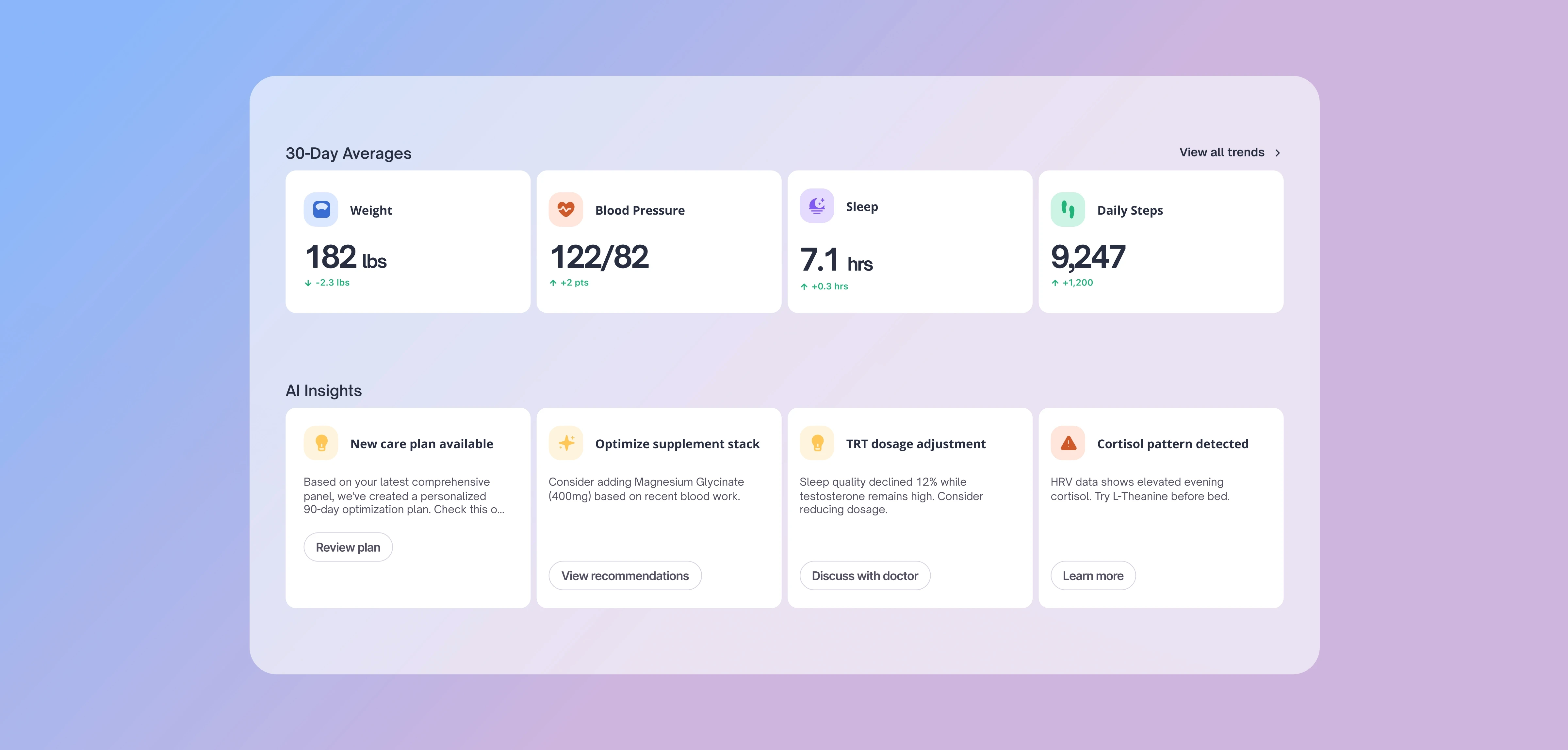
OneTwenty turns your bloodwork and wearable data into a clear picture of sleep, hormones, and metabolic health, and coordinates with independent licensed physicians on the protocol that fits your numbers. Currently in closed beta, open beta launching June 2026.
Join the OneTwenty waitlistFounding members get 50% off · HSA/FSA eligible · launching June 2026
OneTwenty is a health technology company. We are not a medical provider, laboratory, or pharmacy. All clinical services, including lab testing, telehealth consultations, and prescription fulfillment, are provided exclusively by independent, licensed third parties. OneTwenty does not prescribe medications, provide diagnoses, or offer medical treatment. This article is educational and is not a substitute for professional medical advice. Always consult your physician before changing your health regimen.
Lifelong Optimization
Not your average
Checkup
Every life stage brings new biological demands. Tracking the right metrics at the right time helps you adapt, optimize performance, and extend both lifespan and healthspan.
Traditional
Manual Data Processing
Guesswork Trend Detection
Slow Campaign Setup
Multiple Tools, Multiple Logins
Reactive Decision-Making
Manual Reporting
Delayed Results
High Error Risk
Automated Data Sync
Real-Time Trend Insights
Instant AI Optimization
All-in-One Platform
Proactive AI-Driven Strategies
Auto-Generated Reports
Instant Performance Updates
AI Precision

Frequently Asked Questions
Clarity before
you commit
Answers on setup, scale, and support to remove blockers.